ISO 22000 in Egypt: How to Turn Food Safety into a Competitive and Export Advantage?
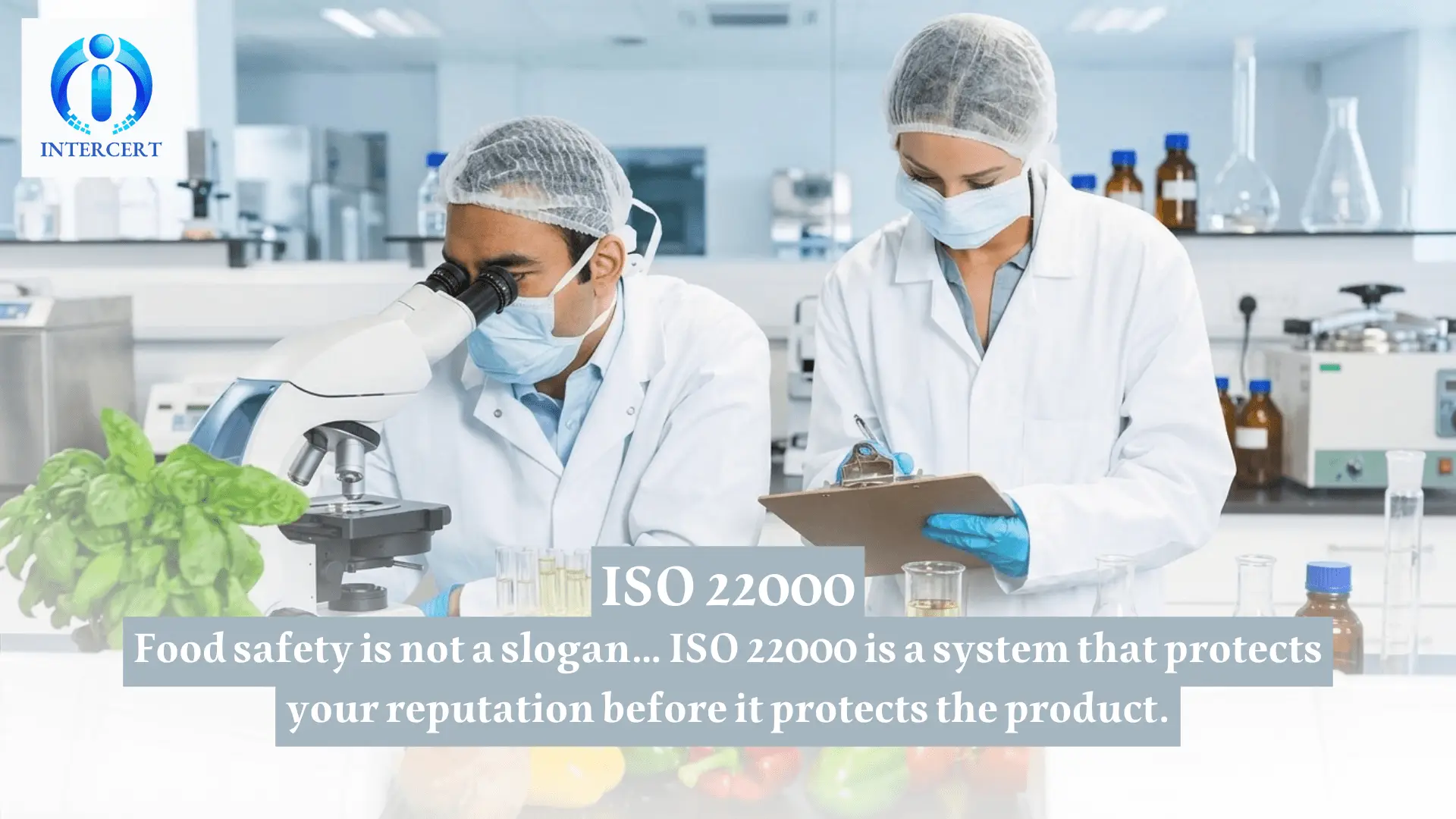
In one of the major food factories, everything was going well. Production was increasing, profits were rising, and products were enjoying great demand in local markets. But suddenly, the general manager receives a call from one of the major clients: “Bacterial contamination has been detected in one of your shipments. We will immediately stop dealing with you, and we will withdraw all your products from the market.”
Within days, the company’s reputation, built over years, collapsed. Sales dropped by 60%, major clients left, and they faced multi-million-pound lawsuits.
This is not a fictional story. This is the reality of companies that treat food safety as “formal procedures” rather than a “survival strategy.”
But what if I told you there is a smart way to avoid this nightmare entirely?
This is where ISO 22000 certification comes in—the leading international standard for food safety management systems. It is not just a document but a living system that transforms food safety from mere regulatory procedures into a comprehensive institutional culture that ensures protection from farm to fork.
What is ISO 22000 Certification?
ISO 22000 is the leading international standard for food safety management systems, designed to provide a unified framework that any organization in the food supply chain, regardless of its size, can use to build an effective system for managing food safety risks and continuously improve its performance.
This standard combines elements of traditional management systems with the principles of Hazard Analysis and Critical Control Points (HACCP), creating an integrated system that focuses on prevention rather than dealing with consequences. The standard follows the high-level structure (Annex SL) that aligns with other management standards such as ISO 9001 and ISO 14001, making it easier for organizations to integrate their various systems into a harmonious management framework.
Obtaining this certification from an accredited certification body like INTERCERT is an official declaration to the world that your organization does not just make promises but translates its commitment to food safety into tangible and measurable actions, placing consumer trust at the heart of its strategy.
Who Benefits from Obtaining ISO 22000 Certification?
| Sector | How Does It Benefit from the Certification? | Tangible Result |
| Food and Beverage Manufacturing Companies | Identifying and controlling risks associated with production lines | Ensuring final product safety, reducing contamination incidents, and costly recalls |
| Restaurants and Catering Services | Enhancing guest confidence in the safety of meals served | A strict kitchen management system, quality service, and guest safety |
| Food Transport and Storage Companies | Maintaining the cold chain and optimal storage conditions | Protecting food product safety during transport and distribution |
| Farms and Fisheries | Evidence of commitment to best production practices | Opening marketing doors to major supply chains |
| Raw Material Production Companies | Ensuring the safety of inputs used by factories | Enhancing trust in the entire supply chain, facilitating export |
What Are the Key Pillars of ISO 22000 Certification?
ISO 22000 is built on ten clauses that form the integrated framework for a food safety management system. Clauses 4 to 10 define the mandatory requirements. The essence of these can be summarized in the following table:
| Clause | Explanation | Objective | Expected Outcome |
| Context of the Organization (Clause 4) | Understanding internal and external factors affecting food safety and identifying the needs of relevant interested parties. | Developing a food safety management system that fits the organization’s reality and its unique challenges. | A realistic and effective system that stems from the organization’s needs and environment. |
| Leadership (Clause 5) | Top management commitment to establishing a food safety policy, defining roles and responsibilities, and ensuring resources are provided. | Establishing a genuine food safety culture led by leaders, not just formal procedures. | A work environment where everyone feels responsible for food safety. |
| Planning (Clause 6) | Identifying and assessing risks, determining legal requirements, setting measurable objectives, and managing opportunities. | Moving from reacting to incidents to proactive planning to prevent them. | A clear and proactive plan for managing risks and achieving food safety objectives. |
| Support (Clause 7) | Providing necessary resources, building worker competencies, raising awareness, ensuring effective communication, and managing documentation. | Empowering workers and equipping them with the knowledge and tools to work safely and efficiently. | An aware and qualified workforce, with transparent and effective communication channels. |
| Operation (Clause 8) | Planning and controlling operational processes, applying Prerequisite Programs (PRPs) and HACCP plans, and emergency preparedness. | Implementing processes in a disciplined manner that reduces risks and ensures emergency preparedness. | Safe and controlled operations, with rapid and effective emergency response. |
| Performance Evaluation (Clause 9) | Monitoring, measuring, and analyzing performance, conducting internal audits, and performing periodic management reviews. | Verifying the system’s effectiveness and identifying strengths and weaknesses based on data and facts. | A transparent and clear view of food safety performance, and decision-making based on accurate information. |
| Improvement (Clause 10) | Addressing non-conformities and taking corrective actions, and continuously working to improve the system and its performance. | Establishing a culture of continuous development and raising the system’s efficiency to achieve the highest levels of safety. | A continuously evolving and improving food safety system that keeps pace with best practices and new challenges. |
What Are the Benefits of Obtaining ISO 22000 Certification?
| Benefit | Explanation | Tangible Result |
| Enhancing Customer Trust | Tangible evidence of the organization’s commitment to product safety | Customer loyalty, improved brand image |
| Opening New Markets | A basic requirement for entering supply chains and major projects | Increased exports, new export opportunities |
| Ensuring Legal Compliance | Understanding and meeting legal and regulatory requirements | Protection from fines, penalties, and legal risks |
| Improving Operational Efficiency | Streamlining processes and focusing on prevention | Reducing waste and contamination, lowering operational costs |
| Raising Internal Awareness | Enhancing employee awareness and a culture of quality and food safety | Collective responsibility rather than just regulatory procedures |
| Improving Risk Management | Systematic tools for identifying, assessing, and managing food risks | Enhancing the organization’s resilience and enabling proactive decision-making |
Real Success Stories from the Egyptian Market
| Company | Challenge | Solution with INTERCERT | Result |
| Major Food Factory | Inability to export to Gulf and European markets | Implementing ISO 22000 and an integrated HACCP system | Obtaining certification and increasing exports by 40% |
| Restaurants and Hotels | Frequent guest complaints about food quality and safety | Implementing a food safety management system according to ISO 22000 | Improving restaurant reputation and increasing bookings by 25% |
| Food Distribution Company | Difficulty maintaining the cold chain during transport | Implementing strict procedures according to ISO 22000 | Reducing waste by 30%, increasing customer trust |
Frequently Asked Questions About ISO 22000 (FAQ)
What is ISO 22000 certification in brief?
It is the leading international standard for food safety management systems, providing a unified framework that any organization in the food supply chain can use to build an effective system for managing food safety risks and continuously improve its performance by integrating management system elements with HACCP principles.
What is the difference between ISO 22000 and HACCP?
HACCP is an essential tool that focuses on identifying hazards and control points in food processes, while ISO 22000 is a comprehensive management system that integrates HACCP principles within a broader framework that includes leadership, planning, support, and performance evaluation. Simply put, HACCP is a tool within ISO 22000 requirements, not a substitute for it.
What is the difference between ISO 22000 and FSSC 22000?
Both are food safety management system standards, but FSSC 22000 is based on ISO 22000 and adds additional and more detailed requirements, especially those related to Prerequisite Programs (PRPs). FSSC 22000 is more comprehensive and stringent and is recognized by the Global Food Safety Initiative (GFSI), making it often required by major global supply chains.
How much does it cost to obtain ISO 22000 certification in Egypt?
The cost varies depending on the organization's size and the readiness of its current system. We recommend contacting the INTERCERT team for an accurate quote tailored to your needs.
How long does the certification process take?
The duration depends on the organization's size and readiness and includes the external audit and the extraction of reports (NCRs, Positive Findings). We recommend contacting the INTERCERT team for an accurate timeline for completing all procedures.
What are the common challenges in implementing the standard?
Challenges include lack of internal competencies, difficulty in documentation, high initial cost, and resistance to change. These can be overcome through intensive training, using digital systems for document management, viewing cost as a long-term investment, and building a food safety culture within the organization.
How do you choose a certification body?
It is essential to choose a certification body accredited by a nationally recognized accreditation body, with a good reputation and experience in your field. INTERCERT has the experience and accreditation necessary to ensure your certificate enjoys global trust and recognition.

Start Toward Global Markets with Confidence and Quality
ISO 22000 certification is not just a document; it is an investment in your organization's future, reputation, and ability to compete globally. In a world where consumers are no longer just looking for tasty food but for safety, transparency, and trust, food safety has become the difference between those who stay at the forefront and those who fall behind.
