What is GMP Certification? And How Does It Reduce Waste and Raise Manufacturing Efficiency in Egypt by Up to 30%?
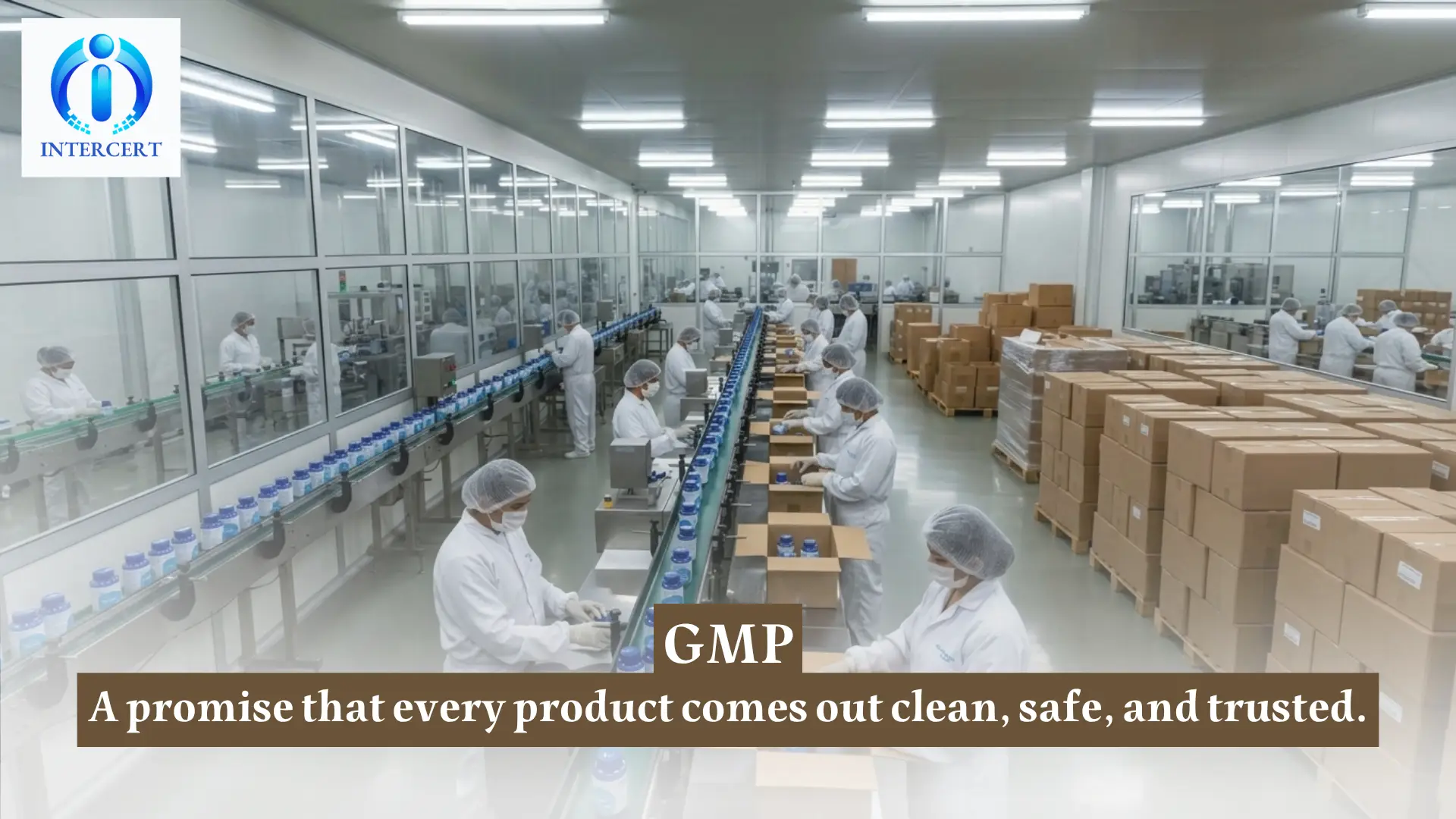
The general manager of one of Egypt’s major factories wakes up every morning to one number that bothers him: the waste and rework rate. It rises by 8-12% every year, despite production not increasing.
He consults the quality team, and they tell him, “We’ve upgraded equipment, applied hygiene standards, and hired engineers.” He asks, “How much did we save? And where is the documentation?” And everyone falls silent.
This is the reality of thousands of factories and companies in Egypt that treat quality as an “additional cost” rather than an “opportunity for profit and export.”
And this is where GMP comes in, as a roadmap that transforms manufacturing quality from a fixed cost into an opportunity for achieving financial savings and opening markets. Studies indicate that organizations implementing the GMP system achieve a reduction in waste and rework ranging between 15% and 30%.
What Are the Most Notable Egyptian Achievements in GMP?
GMP certification is no longer a luxury adopted only by large companies; it has become a standard of excellence adopted by leading institutions across various sectors in Egypt, driven by tangible economic benefits and national trends toward localizing the pharmaceutical industry and enhancing exports.
Strong signals from the Egyptian market confirm this strategic shift:
Institution | Achievement | Significance |
Khufu Pharma Factory | Obtained GMP from the Egyptian Drug Authority and began exporting to Yemen | Designed according to EU-GMP with investments of 5 billion EGP |
EVA Pharma | First EU-GMP in biological drugs and high-containment preparations | A qualitative leap and opening global cooperation |
Holding Company for Pharmaceuticals | Injected 1.8 billion EGP to develop 82 production lines, with 42 lines obtaining GMP | National commitment to developing the pharmaceutical industry |
Orchidia Pharma | WHO-GMP, international recognition, and ISO 9001/14001 | Multiple recognition in the Middle East and Africa |
Egyptian Drug Authority | Tightening GMP requirements and renewing them in February 2026 | Consolidating sustainable commitment and patient protection |
GMP: Four Pillars That Transform Compliance into Competitive Advantage
Pillar | Explanation | Tangible Result |
Your Passport to Global Markets | GMP is a basic requirement for international recognition and export | Opening new markets and increasing exports |
Patient Protection and Trust Building | Ensuring every product is safe, effective, and compliant with specifications | Trust of patients, doctors, and regulatory bodies |
Regulatory Compliance and Risk Avoidance | A requirement for licensing, trading, and continuity | Avoiding license revocation, fines, and production stoppage |
Improving Operational Efficiency and Reducing Waste | Standardizing procedures, defining responsibilities, and product traceability | Reducing errors, rework, and operational costs |
The Accreditation Journey with INTERCERT—Quality That Begins with Understanding
Stage | Practical Summary |
Application and Scope Definition | Understanding your manufacturing activity, products, and production lines |
Initial Review (Stage 1) | Review of quality system documentation, policies, and objectives |
Main Review (Stage 2) | Comprehensive on-site review, record review, and effectiveness verification |
Certification Issuance | Review of auditors’ report and issuance of internationally recognized certification |
Follow-up and Sustainable Improvement | Annual periodic audits and comprehensive audit every 3 years |
How to Choose Your Trusted Partner in the GMP Journey?
When choosing a certification body for GMP in Egypt, look for:
- Official Accreditation: Ensure the certification body is accredited by the Egyptian Accreditation Council (EGAC), the national accreditation authority in Egypt.
- International Recognition: Preferably the body is accredited by international organizations to ensure global recognition of your certificate.
- Proven Experience in the Egyptian Market: A body with a proven track record of certifying pharmaceutical, food, and cosmetics factories.
- Understanding of Local Regulations: A body that understands the requirements of the Egyptian Drug Authority and the National Food Safety Authority.
- Impartiality and Independence: Certification decisions are made objectively and with complete integrity.
At INTERCERT, we bring together all these qualities. We are officially accredited by national and international bodies and have a proven track record of certifying leading industrial institutions in Egypt.
Frequently Asked Questions About GMP (FAQ)
What is GMP certification in brief?
GMP is the international standard for Good Manufacturing Practices. It provides a systematic framework to ensure that products are manufactured, tested, packaged, stored, and traced according to strict quality standards through the PDCA cycle (Plan-Do-Check-Act).
What is the difference between Egyptian GMP, WHO-GMP, and EU-GMP?
- Egyptian GMP is the standard approved by the Egyptian Drug Authority and complies with local and international requirements.
- WHO-GMP is the international standard issued by the World Health Organization, widely recognized in developing markets.
- EU-GMP is the stricter European standard required for export to the European Union.
How much does it cost to obtain GMP certification in Egypt?
The cost varies depending on the organization’s size, complexity of production lines, and the readiness of the current quality system. We recommend contacting the INTERCERT team for an accurate quote.
How long does the certification journey take?
The duration varies depending on your organization's size and the readiness of your current system. Large organizations or those with complex systems may take longer.
Does the certification apply to all types of organizations?
Yes, GMP applies to all organizations regardless of size or sector, from pharmaceutical and food factories to cosmetics, medical devices, and food supplements.
How does the certification affect costs and waste?
Studies have proven that organizations implementing GMP achieve a reduction in waste and rework ranging between 15% and 30%.
Does the certification help reduce risks and recalls?
Yes, through documentation and traceability, the certification contributes to reducing the risks of recalls and license revocation and protects the organization's reputation.

Start Toward a More Quality-Driven and Profitable Future
GMP is not just a certificate; it is an investment in your organization’s future. With leading Egyptian examples like Khufu Pharma and EVA Pharma, manufacturing quality has become a reality in the Egyptian market.
The numbers speak for themselves:
- 15-30% reduction in waste and rework
- Improved operational efficiency and reduced losses
- Enhanced reputation and commitment to sustainability
- Opening new markets through compliance with international standards