ISO Training Courses in Egypt | Open New Career Opportunities
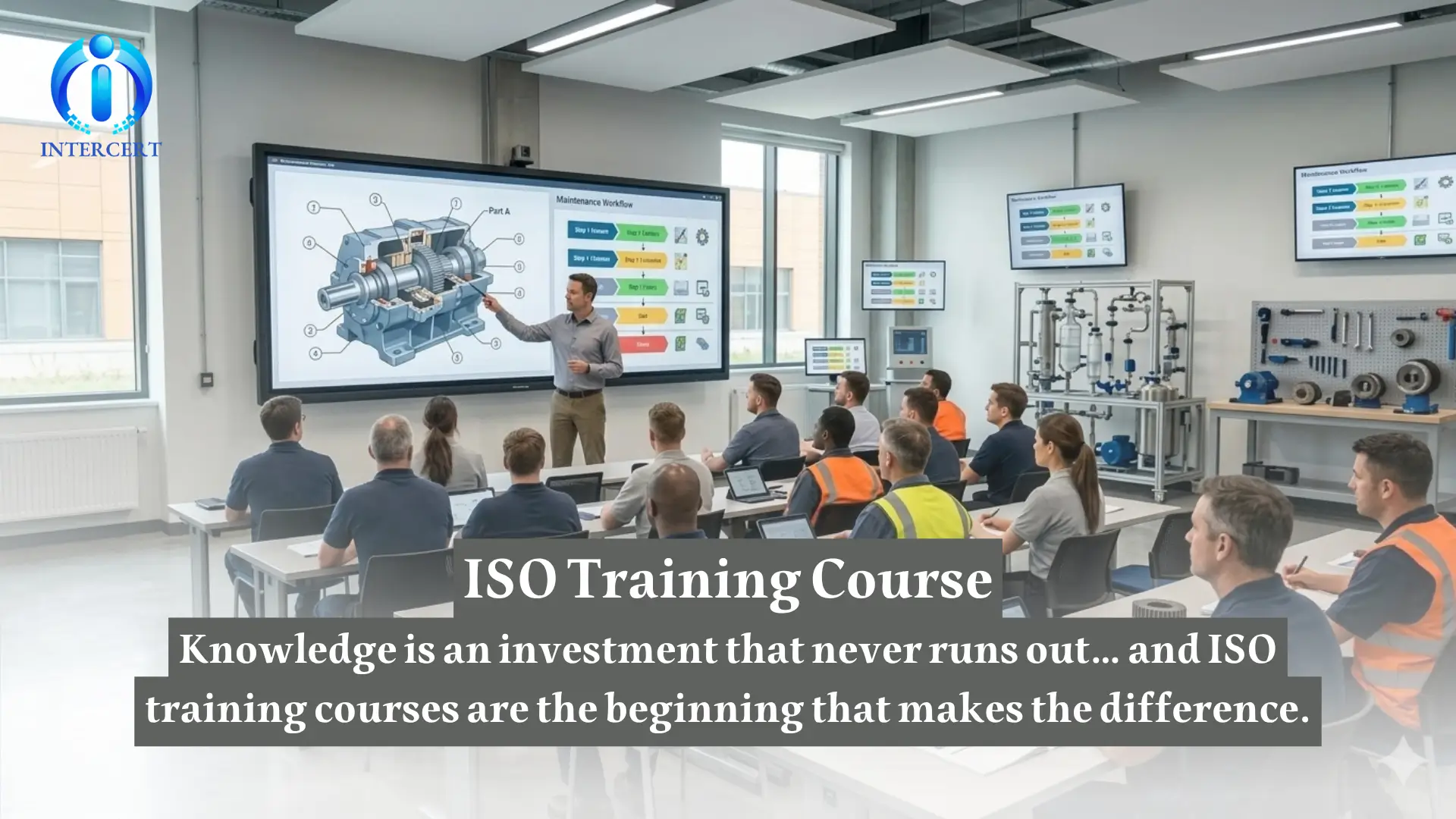
What Are ISO Training Courses? And How Do They Open New Career Horizons?
In every organization, there is a person who possesses passion and ambition but lacks the tool that grants them confidence and recognition. They might be an engineer who wants to become an internal auditor, a quality officer aspiring to lead an audit team, or a manager seeking a deeper understanding of management systems. The difference between those who wait for an opportunity and those who create it is often a certified training course that gives them the knowledge, the skill, and the certificate that the job market trusts. Here, ISO training courses appear not as certificates to hang on the wall, but as an investment in human capital that raises the competence of individuals and institutions alike. An organization that possesses qualified internal auditors is more capable of discovering problems before they escalate, and individuals who hold certified credentials become more capable of competing in the local and international job market. A certified ISO course is a learning and assessment process aimed at equipping the participant with specific competencies: understanding requirements, applying tools, making decisions, and preparing reports. The difference is fundamental between a certificate of attendance and a certificate of competence. The first proves you were in the room; the second proves you are capable of performance. In the job market, what matters is the ability to perform, not just attendance. Therefore, you must ensure that the course is accredited by a trusted body, that the trainers are qualified, that the assessment is genuine, and that the certificate carries real value.What Are ISO Training Courses?
ISO training courses are specialized educational programs aimed at qualifying individuals and organizations to understand, apply, and audit management systems according to the international standards issued by the International Organization for Standardization (ISO). These courses vary by level and objective, but the most in-demand in the job market are three core courses:-
The Awareness Course:
-
The Internal Audit Course:
-
The Lead Audit Course:
Who Benefits from ISO Training Courses?
| Sector | How Does It Benefit from the Courses? | Tangible Result |
| Individuals Seeking Career Development | Gaining certified knowledge, opening new job horizons, and increasing negotiating power | A promotion, moving to a better job, or a salary increase |
| Industrial and Manufacturing Organizations | Qualifying internal teams for auditing, reducing reliance on external auditors | Reducing audit costs, raising system efficiency, and improving quality |
| Service Sector (Banking, Telecom, Healthcare) | Standardizing procedures, improving customer experience, and building a strong reputation | Customer loyalty, investor trust, and an excellent reputation |
| Startups, Small and Medium Enterprises | Building a management system from scratch and qualifying a team capable of maintenance and development | Organized growth, new opportunities, and competitive advantage |
| Government Entities and Non-Profit Organizations | Raising performance efficiency, rationalizing spending, and improving service quality | Better services, citizen trust, and higher efficiency |
| Consulting and Training Companies | Qualifying certified trainers and expanding the service portfolio | Greater training opportunities, a strong reputation, and higher profits |
| Independent Auditors | Obtaining certified credentials that open doors for contracting with certification bodies | More audit contracts, higher income, and greater credibility |
What Are the Key Pillars of ISO Training Courses?
ISO training courses are based on a set of essential pillars that form the backbone of the training program. The differences between the three courses can be summarized in the following table:| Course | Explanation | Objective | Expected Outcome |
| Awareness Course | Providing a comprehensive overview of the standard, its requirements, its benefits, and how to apply it | Understanding the fundamentals of the management system without delving into technical details | General knowledge of the standard, and the ability to participate in its application |
| Internal Audit Course | Qualifying the participant to plan, execute, and report internal auditing according to the standard’s requirements | Discovering nonconformities and proposing corrective actions | The ability to conduct an effective internal audit and improve the system |
| Lead Audit Course | Qualifying the participant to lead audit teams and manage external audit operations | Making certification decisions and dealing with certification bodies | The ability to lead a complete audit and certify systems |
What Are the Benefits of Taking ISO Training Courses?
| Benefit | Explanation | Tangible Result |
| Increasing Job Opportunities | Certified credentials open doors to higher positions in auditing, quality, and compliance. | A promotion, moving to a better job, or a salary increase |
| Raising Organizational Efficiency | Qualifying internal teams capable of managing systems and auditing them | Reducing costs, raising quality, and improving performance |
| Reducing Reliance on External Parties | Building internal capabilities for auditing, maintenance, and development | Saving external auditor costs and faster response |
| Improving Reputation | Demonstrating the organization’s commitment to international standards and developing talent | Customer trust, increased credibility, and attracting new partners |
| Keeping Pace with Updates | Understanding the latest amendments in international standards and applying them | Keeping the system effective and compliant with current requirements |
| Professional Network | Connecting with experts and trainees from different sectors | Collaboration opportunities, experience exchange, and expanding the professional network |
Real Success Stories: Individuals and Organizations Transformed by ISO Training Courses
Entity | Challenge | Solution with INTERCERT | Result |
Quality Engineer in a Food Factory | Inability to get promoted due to lack of certified credentials | Taking the Internal Auditor Course, then the Lead Auditor Course | Promotion to Quality Manager and a 40% salary increase |
Major Contracting Company | Complete reliance on external auditors with high costs | Training an internal team on the Internal Auditor Course | 60% reduction in audit costs and faster response |
Financial Institution | The need to qualify the internal compliance team | Awareness Course, then Internal Auditor Course for all team members | Raising compliance efficiency and improving regulatory reports |
Frequently Asked Questions About ISO Training Courses (FAQ)
What is the Awareness Course in brief?
It is an introductory course that provides a comprehensive overview of the standard, its requirements, its benefits, and how to apply it. It is suitable for beginners or anyone wishing to understand the fundamentals of a management system without delving into technical details.
What is the difference between the Internal Auditor Course and the Lead Auditor Course?
The Internal Auditor Course qualifies the participant to plan, execute, and report internal auditing according to the standard's requirements. The Lead Auditor Course qualifies the participant to lead audit teams, manage external audit operations, make certification decisions, and deal with certification bodies. The lead auditor is the higher level.
How long does each course take?
The duration varies depending on the course and the organizing body. Typically, the Awareness Course takes one day, the Internal Auditor Course takes 2-3 days, and the Lead Auditor Course takes 4-5 days. The duration includes lectures, practical exercises, and the final exam.
Are the certificates internationally recognized?
Yes, if they are issued by a training body accredited by an international accreditation body such as IAF. INTERCERT has the necessary accreditation to ensure that the certificates enjoy global trust and recognition.
How much do ISO training courses cost in Egypt?
The cost varies depending on the course, its duration, the trainer's level, and the organizing body. We recommend contacting the INTERCERT team for an accurate quote tailored to your needs.
Do the courses require prior experience?
The Awareness Course does not require prior experience. The Internal Auditor Course preferably requires the participant to have basic knowledge of the standard. The Lead Auditor course usually requires prior experience in auditing or system management.
What happens after obtaining the certificate?
Obtaining the certificate is the beginning, not the end. It requires actual auditing practice, continuously updating knowledge, and participating in advanced courses to keep pace with updates.

Ready to Be Part of a Success Story That Speaks of Professionalism with Confidence?
ISO training courses are not just certificates; they are an investment in your professional future and your organization's future. In a competitive market, certified competence has become the difference between those who stay at the forefront and those who fall behind.Always remember: a certificate from a non-accredited body may be worthless, while a certificate from INTERCERT is a guaranteed-return investment.
Contact Us Now