ISO 37001 in Egypt: How to Turn Integrity into a Competitive Advantage in Tenders?
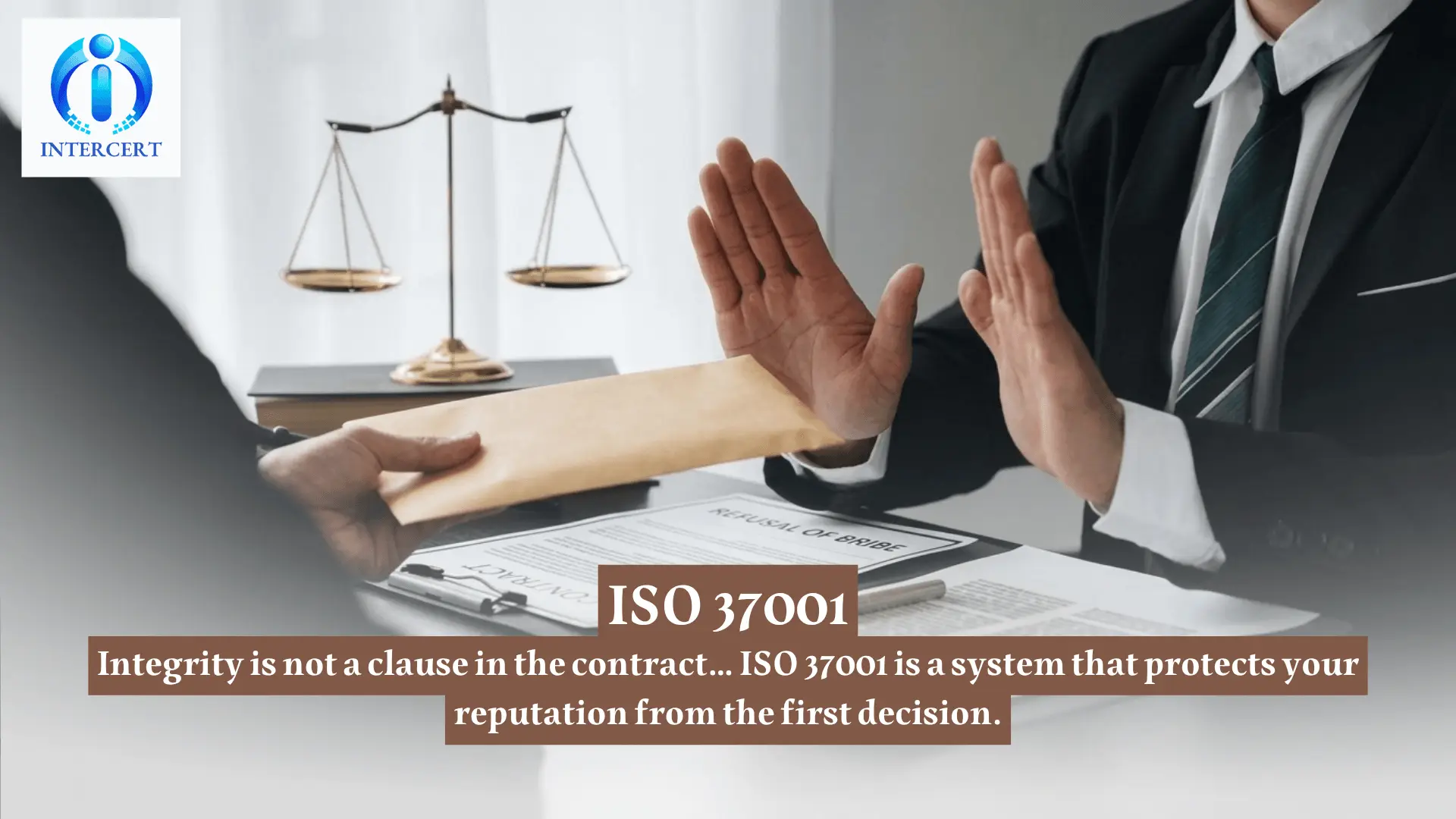
In one of the major contracting companies, a scandal shook the market. The procurement manager was receiving secret commissions from cement and steel suppliers at a rate of 5% of every contract value. This went on for 4 years. The total bribes exceeded $2 million.
The strange part? The company held a quality certificate and had policies and procedures. But it didn’t have a living system to combat bribery.
The result? Devastating losses, regulatory fines, and a reputation destroyed in hours. Since then, this company has become a cautionary example of how not to run your organization.
This is the reality of companies that treat anti-corruption as “formal procedures” rather than an “institutional culture.”
But what if I told you there is a smart way to avoid this nightmare entirely?
This is where ISO 37001 certification comes in—the leading international standard for anti-bribery management systems. It is not just a document but a legal and reputational shield that protects your organization from corruption risks, transforming integrity from an ethical value into an integrated management system that ensures your sustainability and prosperity.
And with the updated version ISO 37001:2025, the path to institutional integrity has become more effective, with updated guidance and practical tools suitable for organizations of all sizes.
What is ISO 37001 Certification?
ISO 37001 is the leading international standard for anti-bribery management systems, designed to provide a systematic framework that any organization, regardless of its size or field of work, can use to build an effective system for preventing, detecting, and responding to bribery and complying with laws and voluntary commitments relevant to its activities.
This standard addresses bribery in all its forms, whether in the public, private, or non-profit sector, and whether it is bribery by the organization, its employees, or its business partners, or even bribery of the organization itself, including both direct and indirect bribery. The standard follows the high-level structure (HLS) that aligns with other management standards, making it easier for organizations to integrate their anti-bribery system with existing systems in a harmonious management framework.
The standard was recently updated to ISO 37001:2025, which reflects the latest developments in anti-bribery practices and provides updated guidance and practical tools suited to the needs of organizations of all sizes.
Obtaining this certification from an accredited certification body like INTERCERT is an official declaration that your organization adopts the highest standards of integrity and transparency, making anti-corruption a strategic priority that enhances the trust of customers and partners.
Who Benefits from Obtaining ISO 37001 Certification?
| Sector | Why Does It Need the Certification? | Tangible Result |
| Multinational Companies and Exporters | Meeting anti-corruption requirements in international markets | Protecting reputation, building trust of global partners and investors |
| Financial and Banking Sector | High risks of bribery and corruption, strict regulatory requirements | Enhancing customer trust, complying with laws |
| Governments and Public Entities | Ensuring transparency in public spending | Building citizen trust, promoting good governance |
| Contracting Companies and Major Projects | A basic requirement for government and international tenders and contracts | Winning new projects, expanding business scope |
| Small and Medium Enterprises | A flexible framework to build an effective anti-bribery system | Enhancing competitiveness, opening new markets |
What Are the Key Pillars of ISO 37001 Certification?
ISO 37001 is built on ten clauses that form the integrated framework for an anti-bribery management system. Clauses 4 to 10 define the mandatory requirements. The essence of these can be summarized in the following table:
| Clause | Explanation | Objective | Expected Outcome |
| Context of the Organization (Clause 4) | Understanding internal and external factors affecting bribery risks, identifying stakeholder needs, and defining the system’s scope. | Developing an anti-bribery system that fits the organization’s reality, its unique challenges, and work environment. | A realistic and effective system that stems from the organization’s needs and operational environment. |
| Leadership (Clause 5) | Top management commitment to establishing an anti-bribery policy, defining roles and responsibilities, and ensuring resources and effective oversight are provided. | Establishing a genuine integrity culture led by leaders, not just formal procedures, and making anti-corruption a collective responsibility. | A work environment where everyone feels responsible for anti-bribery and institutional integrity. |
| Planning (Clause 6) | Conducting a comprehensive bribery risk assessment, identifying necessary controls, setting measurable objectives, and planning actions to address risks and opportunities. | Moving from reaction to proactive planning to manage bribery risks and anticipate challenges. | A clear and proactive plan for managing bribery risks and achieving integrity objectives. |
| Support (Clause 7) | Providing necessary resources, building worker competencies, training and raising awareness, ensuring effective communication and document management, and ensuring reporting confidentiality. | Empowering workers and equipping them with the knowledge and tools to contribute to anti-bribery and ensuring safe channels for reporting violations. | An aware and qualified workforce, transparent and secure communication channels, and a culture that encourages reporting violations. |
| Operation (Clause 8) | Implementing operational controls and procedures for anti-bribery, conducting due diligence on projects and business partners, and managing financial and commercial controls. | Applying effective controls to protect the organization from bribery risks in daily operations and business relationships. | Transparent and controlled operational processes and business relationships built on trust and integrity. |
| Performance Evaluation (Clause 9) | Monitoring, measuring, and analyzing the anti-bribery system’s performance, conducting internal audits, and performing periodic management reviews. | Verifying the system’s effectiveness and identifying improvement opportunities based on tangible evidence and accurate data. | A transparent and clear view of system performance and decision-making based on accurate information to enhance integrity. |
| Improvement (Clause 10) | Addressing nonconformities and taking corrective actions, and continuously working to improve the anti-bribery management system and its effectiveness. | Establishing a culture of continuous development and raising the system’s efficiency to face evolving bribery risks. | A continuously evolving and improving system that ensures ongoing commitment to integrity and effective anti-corruption. |
What Are the Benefits of Obtaining ISO 37001 Certification?
| Benefit | Explanation | Tangible Result |
| Protecting Reputation and Building Trust | Tangible evidence of the organization’s commitment to integrity and anti-corruption | Trust of customers, partners, and investors, protecting the brand |
| Competitive Advantage | A basic requirement for international tenders and contracts | Winning new projects, entering previously closed markets |
| Ensuring Legal Compliance | Meeting local and international anti-corruption laws | Protection from fines, penalties, and legal risks |
| Improving Operational Efficiency | Strict financial and commercial controls, due diligence procedures | Enhancing the governance structure, improving operational efficiency |
| Promoting Integrity Culture | Employee awareness and motivation toward best integrity practices | Collective responsibility rather than just regulatory procedures |
| Reducing Financial Risks | Early prevention and detection of bribery cases | Reducing fines and compensation, protecting against investigation costs |
Real Success Stories from the Egyptian Market
| Company | Challenge | Solution with INTERCERT | Result |
| One of the Major Contracting Companies | Losing government tenders due to lack of an anti-bribery system | Implementing ISO 37001 and due diligence procedures | Winning tenders worth 50 million EGP, enhancing trust with government entities |
| Engineering Consulting Firm | Concerns about dealing with international companies due to corruption risks | Obtaining ISO 37001 from INTERCERT | Entering new markets, contracting with global companies |
| Financial Institution | Strict regulatory requirements for anti-corruption | Implementing an anti-bribery system according to ISO 37001 | Full legal compliance, enhancing customer trust |
Frequently Asked Questions About ISO 37001 (FAQ)
What is ISO 37001 certification in brief?
It is the leading international standard for anti-bribery management systems, providing a systematic framework that any organization can use to build an effective system for preventing, detecting, and responding to bribery and complying with relevant laws and commitments.
What is the difference between ISO 37001:2016 and the updated 2025 version?
The 2025 version represents a substantial update to the standard, reflecting the latest developments in anti-bribery practices and providing updated guidance and practical tools, including real-world case studies, specifically designed to suit the needs of organizations of all sizes, especially small and medium enterprises.
How much does it cost to obtain ISO 37001 certification in Egypt?
The cost varies depending on the organization’s size and the scope of certification. We recommend contacting the INTERCERT team for an accurate quote tailored to your needs.
How long does the certification process take?
The duration depends on the organization's size and readiness and includes the external audit and the extraction of reports (NCRs, Positive Findings). We recommend contacting the INTERCERT team for an accurate timeline for completing all procedures.
Is the certification suitable for small and medium enterprises?
Yes, absolutely. The standard was designed to be flexible and applicable to any organization regardless of its size. A practical guide has been developed specifically to help small and medium enterprises understand and apply the standard's requirements efficiently without the need for massive resources.
How does the certification help in government tenders?
Many government and international entities require ISO 37001 certification from their contractors as proof of commitment to integrity and transparency, giving you a decisive competitive advantage in tenders and major projects.
How do you choose a certification body?
It is essential to choose a certification body accredited by a nationally recognized accreditation body, with a good reputation and experience in your field. INTERCERT has the experience and accreditation necessary to ensure your certificate enjoys global trust and recognition.

Start Toward a More Integrity-Driven and Prosperous Future
ISO 37001 certification is not just a document; it is an investment in your organization's future, reputation, and sustainability. In a world where anti-corruption laws are tightening and transparency requirements from customers and investors are escalating, institutional integrity has become the difference between those who stay at the forefront and those who face fines and lose trust.
